How to Verify a Photo Is Authentic: 7 Tools and Methods in 2026

A photo lands on WhatsApp, shows up in an insurance claim, or illustrates a second-hand listing. The first question in 2026: is it real? With image generators able to produce a photorealistic shot in seconds, verifying a photo's authenticity is no longer a specialist skill — it's a basic reflex. Here are the 7 methods and tools that actually work, from fastest to most reliable.
Why verifying a photo has become essential
AI-powered fraud is surging. Deloitte estimates that losses from generative-AI-enabled fraud could reach roughly $40 billion in the United States by 2027. Fake claim evidence, fabricated product photos, deepfakes used in investment scams: the image — once self-evident proof — has become an attack surface.
The problem is asymmetric. Generating a fake image costs a few cents and a few seconds; detecting one with certainty takes time, tools, and is sometimes impossible. That's why you should combine several methods rather than trust a single signal.

1. Reverse image search — the first reflex
Before anything else, check whether the image already exists elsewhere. A reverse search reveals if a photo has been reused, cropped, or pulled out of its original context.
- Google Lens (via Google Images or the app): the most thorough for finding occurrences and similar pages.
- TinEye: excellent for locating the oldest known occurrence of an image and spotting edited versions.
- Bing Visual Search: a useful second opinion that often complements Google.
If the "photo of the couch you're buying" appears on a furniture site on the other side of the world, you have your answer. Limitation: a fully AI-generated image will have no prior occurrence — so a lack of results does not prove authenticity.
2. Inspect the EXIF metadata
Every photo taken by a device carries EXIF metadata: camera model, date, sometimes GPS coordinates, aperture, shutter speed. Free tools such as an online EXIF viewer let you read them in seconds.
Consistent EXIF (a real smartphone model, a plausible date) is a good sign. But beware: metadata is easy to strip or fake, and most social networks erase it automatically on upload. Missing EXIF therefore doesn't mean "fake" — just "inconclusive." And present EXIF may have been fabricated. It's a clue, never proof. To go further, our guide to EXIF metadata explains how to read them and what they really prove.
3. Read the visual tells of an AI-generated image
The human eye is still useful. Image generators improve fast but still leave artifacts: hands with inconsistent fingers, unreadable text in the background, reflections or shadows that don't match a single light source, jewelry or patterns that "melt," repetitive backgrounds. Zoom into transition zones and fine details.
This method has a growing limitation: the newest models fix these flaws. A "clean" shot is therefore no guarantee of authenticity. Conversely, a glaring artifact remains a strong red flag. To go further, see our complete guide to detecting an AI-generated photo.
4. AI detectors and invisible watermarking
Several players now embed an invisible digital watermark directly into generated images. The most advanced is Google DeepMind's SynthID: it inserts an imperceptible signature into the pixel statistics that survives cropping, compression, and color adjustments. In 2026, Google opened a SynthID Detector portal and reports having watermarked more than 100 billion pieces of content; OpenAI, Nvidia, and ElevenLabs have adopted the same watermark, making images from many mainstream generators detectable.
The limitation is essential to understand: these detectors only recognize content produced by participating models. An image from an unmarked open-source model will slip through. As for "generic" detectors that claim to guess whether an image is AI from the pixels alone, they show high error rates and should be treated with caution. This is exactly how Google's SynthID watermark works: our SynthID checker guide shows how to check an image step by step, and what a negative result does not prove.

5. Content Credentials and the C2PA standard
Rather than guessing after the fact, the industry is building a provenance standard: C2PA (Coalition for Content Provenance and Authenticity), which reaches the public under the name Content Credentials. The idea: attach to each image a cryptographically signed "nutrition label" describing how it was created and edited.
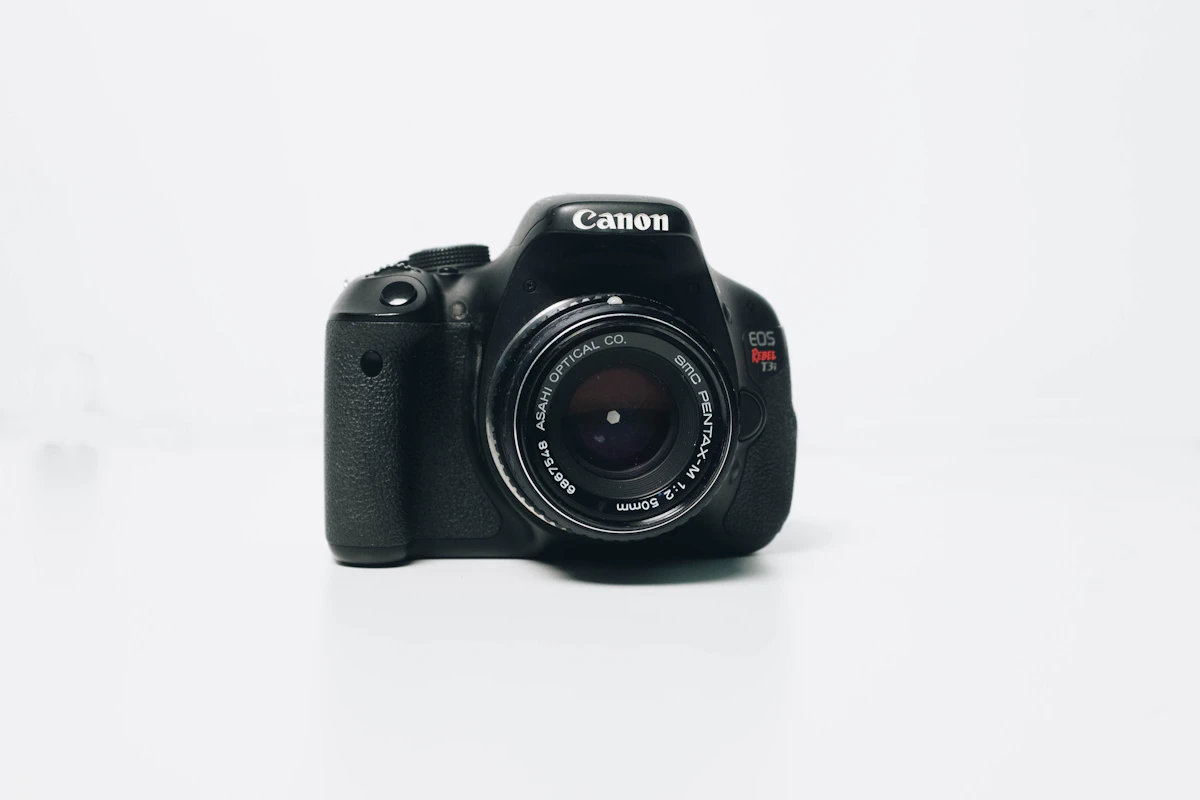
The coalition brings together Adobe, Microsoft, Google, Meta, OpenAI, the BBC and thousands of members, plus camera manufacturers. The Leica M11-P was the first consumer camera to sign its files at capture; Sony, Canon, and Nikon followed via dedicated firmware, and the Google Pixel 10 signs its images using a hardware security chip. You can inspect this information on the official Content Credentials verification site.
Limitation of this approach: C2PA metadata can be removed (a screenshot, for instance, wipes the signature). Provenance therefore proves authenticity when present, but its absence does not condemn an image.
6. The legal frame: mandatory marking from August 2026
Regulation is accelerating. Article 50 of the European AI Act sets transparency obligations applicable from 2 August 2026: providers of generative AI systems must mark their synthetic content in a machine-readable format, and anyone who shares a deepfake must clearly disclose it. In practice, the ecosystem is pushing toward a future where a legitimate image is expected to carry its provenance — and where an image with no traceability becomes suspect by default.
7. The most reliable method: certify at the source
All the methods above try to answer the same question after the fact: "is this image fake?" That's a losing battle, because detection always trails generation. The only robust approach reverses the logic: rather than proving an image isn't fake, you certify its authenticity at the moment of capture.
That's the Truth-Check principle. The instant you take the photo, the app timestamps it, ties it to verified metadata (date, device, location) and generates a publicly viewable certificate at a unique URL. Anyone can then verify the image in seconds, with no expertise. For a claim, a property inventory, a construction log or evidence destined for a dispute, that's the difference between a contestable snapshot and an admissible record. See also our guide on the value of digital evidence in court.

Which method should you choose?
In practice, combine according to the stakes. For a quick doubt about an image seen online: reverse search + reading the visual tells. For a serious check: add EXIF inspection, the SynthID detector, and an examination of Content Credentials. And if you are the one producing images that must serve as proof, don't rely on other people's detection: certify your photos at capture. It's the only method that doesn't degrade as AI advances.
Verify and certify today
Truth-Check is available for free on iOS and Android, with an online verification tool.
- Site and verification: truth-check.com
- Free photo verification tool
- Download on the App Store
- Get it on Google Play
Sources
- Coalition for Content Provenance and Authenticity (C2PA) — c2pa.org
- Google — "SynthID Detector: identify content made with Google's AI tools" — blog.google
- European AI Act, Article 50 (transparency obligations) — artificialintelligenceact.eu
- European Commission — Code of Practice on marking and labelling of AI-generated content — digital-strategy.ec.europa.eu
- Deloitte Center for Financial Services — projections de pertes liées à la fraude dopée à l'IA générative.
- Images : Unsplash.
Try Truth-Check for free
Certify your photos and videos in seconds. 3 free credits, no commitment.
Download

