
Can a Photo Be Irrefutable Evidence? French Law (2026)
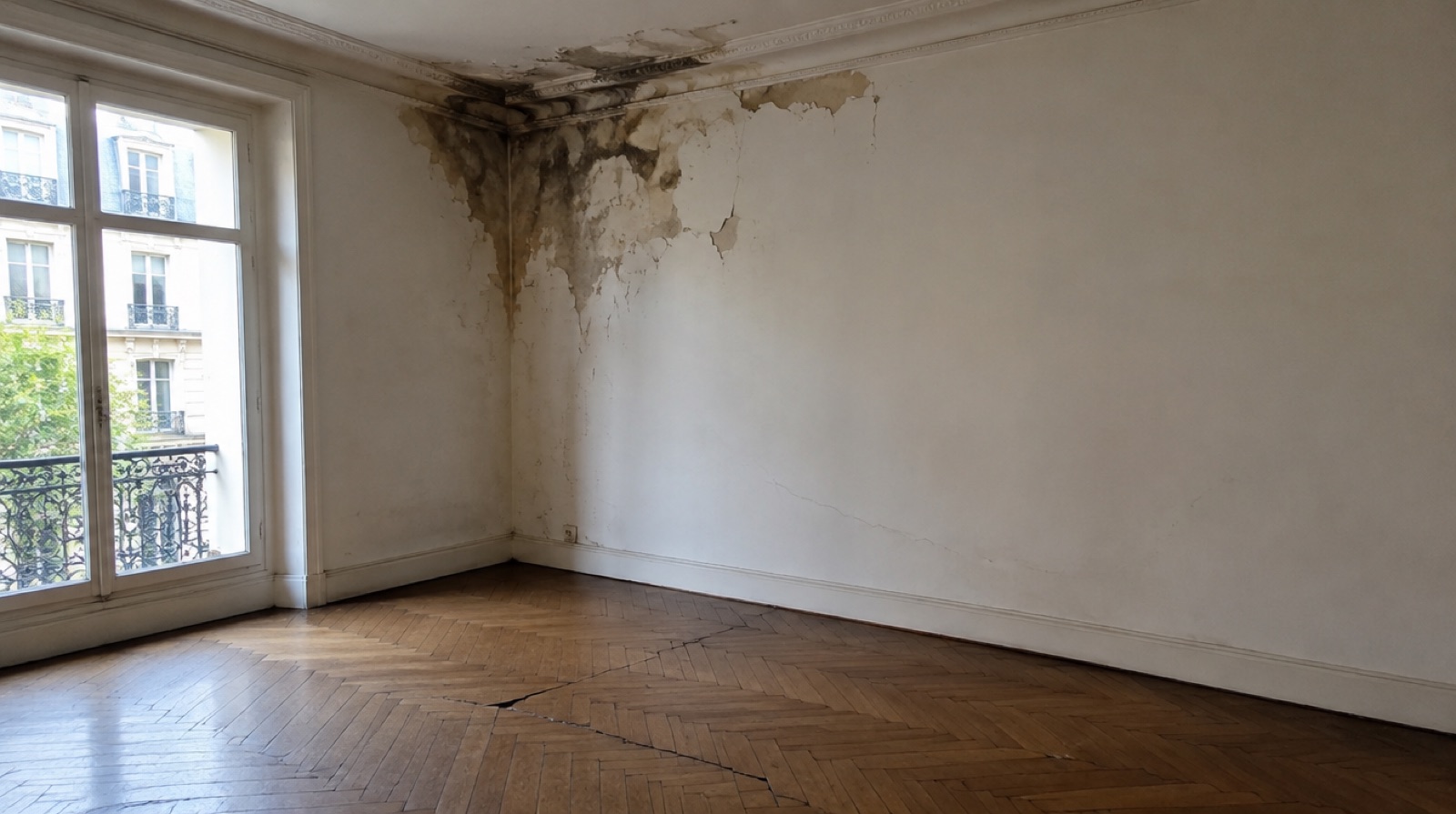
No, a photo cannot be "legally irrefutable": under French law, it is always the judge who assesses the value of evidence, and no technology removes the possibility of challenging it. But the better question is a different one: can a silent modification of a photo be made technically impossible? Here the answer is yes — provided trust no longer rests on the image itself, but on an independent record that makes it verifiable.
This article starts from a simple idea: in the age of AI, seeing a photo is no longer enough; you must be able to verify its history. We review what French evidence law actually says, what separates evidence that is admissible, intact, authentic and probative, how a chain of trust works technically (cryptographic fingerprint, timestamp, context), and how far — and where — the guarantee provided by a tool like Truth-Check goes.
In short
- Admissibility: to prove a fact (damage, an inventory of fixtures, an accident), evidence is in principle free — "by any means" (Civil Code, art. 1358). A photo is therefore admissible.
- Probative value: admissible does not mean convincing. The judge assesses reliability, and the opposing party can challenge it.
- Integrity: whether a file has changed is a technical question. A cryptographic fingerprint (SHA-256 hash) detects any modification, even a single pixel.
- Authenticity: who, when, where and with which device depends on context recorded at the time of the events, by a party independent of the file.
- Legality: certifying a photo does not make an unlawful shot lawful. In France, privacy and image rights frame the taking of photos; abroad, principles converge but evidence rules remain national.
- "Irrefutable" is not a legal category. The realistic goal is more precise: make any silent alteration detectable, and shift the debate toward specific arguments instead of general doubt.
Why a photo alone proves almost nothing
A "classic" photo (taken with a smartphone's native camera and sent via messaging) answers none of the four questions the opposing party may legitimately ask:
- Has it been modified? Retouching, removing or adding elements, AI generation: a well-made fake leaves no visible trace.
- When was it actually taken? A device clock can be set, and a file date can be edited.
- In what circumstances? Location, device, author: this EXIF metadata can be edited in seconds with a free tool, and is stripped by most messaging apps.
- Is it really the original file? A copy, a screenshot or a retouched version looks identical.
Generative AI changed the scale of the problem. Retouching that once required a graphic designer now takes a single sentence:

Other checking methods are covered in our guide how to verify a photo's authenticity, but they share the same limit: they analyse the file, while the question put to the judge concerns its history.
What French law says about digital evidence
The Civil Code (title IV bis, "On the proof of obligations") sets out several principles useful for reasoning about a photo. (Quotations below are our translation of the French text.)
1. Freedom of evidence (art. 1358)
Under article 1358 of the Civil Code: "Except where the law provides otherwise, proof may be provided by any means." To prove a fact — damage to a home, a damaged parcel, the state of a building site, the circumstances of an accident — a photograph is therefore, in principle, admissible. Freedom of evidence has exceptions: for certain legal acts the law requires a written document, which a photo does not replace.
2. Electronic writing: identification and integrity (arts. 1365 and 1366)
Article 1365 defines writing "whatever its medium". Article 1366 adds that "electronic writing has the same probative force as paper writing, provided that the person from whom it originates can be duly identified and that it is established and preserved in conditions capable of guaranteeing its integrity".
Important caveat: a photo is not, strictly speaking, "writing" within the meaning of these articles. We do not present them as directly applicable to a photograph. But their logic — identify the origin and guarantee integrity over time — is the natural reading grid for any digital evidence, and the one a judge or expert will have in mind when facing a contested file.
3. Electronic signature (art. 1367)
Article 1367 provides that, for an electronic signature, the reliability of the process is presumed until proven otherwise when conditions set by decree are met (creation of the signature, signatory identity, integrity of the document). It is an option that strengthens certain evidence, not a precondition for a photo to be admissible.
4. Reliable copy (art. 1379)
Article 1379 states that "a reliable copy has the same probative force as the original" and that "reliability is left to the judge's assessment". That last sentence sums up the whole subject: the final word remains judicial.
5. Electronic timestamping (eIDAS Regulation, art. 41)
The European eIDAS Regulation (EU) No 910/2014 sets, in article 41, two complementary rules:
- an electronic time stamp cannot be denied legal effect and admissibility as evidence in legal proceedings solely on the grounds that it is in electronic form or does not meet the requirements of a qualified electronic time stamp;
- a qualified electronic time stamp enjoys a presumption of the accuracy of the date and time it indicates and of the integrity of the data to which they are bound.
In other words: a non-qualified time stamp remains admissible, but does not benefit from the presumption attached to the "qualified" level.
6. Admissibility itself is assessed case by case
Even admissibility is not always automatic. In a plenary assembly ruling of 22 December 2023 (no. 20-20.648), the Cour de cassation held that in civil matters the judge must assess whether using unlawfully or disloyally obtained evidence undermines the fairness of the proceedings, by balancing the right to evidence against competing rights. The decision does not concern photographs, but it illustrates a deeper trend: courts reason through balancing, not automatic rules.
Admissible ≠ intact ≠ authentic ≠ probative ≠ incontestable
Five notions are constantly confused. Distinguishing them is the key to understanding what technology can — and cannot — guarantee.
| Notion | Question | Nature | Who decides? |
|---|---|---|---|
| Admissible | Can I present it to the judge? | Law | The law (freedom of evidence, art. 1358) |
| Intact | Is the file identical to the original? | Technical | A technical check (fingerprint) |
| Authentic | Who, when, where, with which device? | Technical + context | A record independent of the file |
| Probative | How much weight does it carry in the case? | Law + facts | The judge, considering all the evidence |
| Incontestable | Can nobody challenge it? | — | Never guaranteed: the judge assesses |
A photo can be admissible without being intact (we don't know if it changed), intact without being authentic (we know it hasn't changed since… we don't know when), and authentic without being probative (it doesn't demonstrate the disputed fact). The reasonable ambition of a certification tool is to handle the two technical columns, integrity and authenticity, to give the judge solid elements — not to replace the judge.
The real problem: proving a file hasn't changed
A file cannot testify for itself. Look at three versions of the same scene: to the naked eye, you cannot tell which is the original. You need a witness outside the file: an independent record, created at the time of the events, against which to compare what is presented to you later.
The basic technical building block of that comparison is the cryptographic fingerprint (hash).
The digital fingerprint, simply explained
A hash function such as SHA-256 turns any file into a string of 64 characters — its fingerprint. Three properties are enough to see its value:
- Deterministic: the same file always yields the same fingerprint.
- Sensitive: the slightest modification yields a completely different fingerprint.
- One-way: you cannot rebuild a file from its fingerprint, nor craft a retouched file that has the same one.
What if I change a single pixel?

We ran the experiment on a demo image (a 64 × 64 pixel PNG), then changed a single pixel out of 4,096: its red component goes from 124 to 125, a completely invisible difference. Here are the two SHA-256 fingerprints actually computed:
| File | SHA-256 fingerprint |
|---|---|
| Original | ee57e9e93a8ed97e1432bccc16c2df78fa516bf5faf29c59a9cc3eadf9c3a450 |
| One pixel changed | ebbadf1526a40860414973a16761903917a6eff0c1872c3a4df9e5854911641f |
Result: 59 characters out of 64 differ, i.e. 132 bits out of 256. The gap isn't "small", it's total. Whoever checks doesn't need to "see" the difference: they compare two fingerprints. And there is no way to quietly "fix" a file to recover the original fingerprint.
A rigour point: a fingerprint alone proves nothing. It is only worth something if it was recorded at the right time, by a third party, somewhere that cannot be rewritten. That is exactly the role of the chain of trust.
From photo to verifiable evidence: the Truth-Check chain of trust
Truth-Check applies this logic in six steps, based on how the app and platform actually work (documented on our security page).
- Capture — the photo is taken from the app.
- Associated information — the app collects context: date, location (optional), device model, resolution.
- Integrity protection — the app computes the file's SHA-256 fingerprint before upload.
- Certification — the server creates a timestamped record (the date is set by the server, not the device) with a unique verification code, in a single transaction.
- Retention — the record can no longer be modified by a client: only authorised server operations can touch it. The certificate is kept for the duration chosen at creation.
- Later verification — a public page lets a third party view the certificate and compare it with the file presented.
The key idea: the proof no longer depends on the file you are shown, but on an independent server record. If someone later modifies the photo or the protected data, even slightly, the modification is detectable at verification.
What Truth-Check actually aims to prove: five pillars and their limits
There is no point promising what isn't delivered. Here, pillar by pillar, is what the chain provides and how far the guarantee goes.
| Pillar | Question | What Truth-Check provides | How far the guarantee goes |
|---|---|---|---|
| Integrity | Is the content the one that was certified? | SHA-256 fingerprint + record not modifiable by a client | Fingerprint computed by the app, at upload |
| Chronology | When did certification take place? | Date set by the server, not the device | Server timestamp, not qualified under eIDAS |
| Context | In what circumstances? | Date, location (optional), device model, resolution | Data collected by the device |
| Traceability | Can the item's history be traced? | Unique code per certificate; evidence folders as a timeline | Three distinct levels: certified, timestamped, declarative |
| Verification | Can a third party check it? | Public page by link; optional password | The third party compares with the file presented to them |
The right-hand column isn't an admission of weakness: it is what makes the whole credible. A guarantee whose bounds are known is one a lawyer can build an argument on.
Practical case: damage found in an apartment
An owner finds damage in their apartment. A few weeks later, the opposing party asks three questions.
| Opposing party's question | Version A: classic photo | Version B: certified photo |
|---|---|---|
| "When was this photo taken?" | File date: editable | Certification date set by the server |
| "Has it been retouched?" | Cannot be ruled out by eye | Any change alters the SHA-256 fingerprint |
| "Is it the original file?" | No point of comparison | Comparison with the certificate's record |
Version B does not make the photo "irrefutable": the opposing party can still contest the scope of the shot or the circumstances in which it was taken. But the debate changes ground. Where version A leaves a general doubt ("nothing proves that…"), version B forces the other side to allege a specific flaw. (This is a practical argument, not a rule of law: the judge remains free in their assessment.) For detailed cases, see our guide for real estate lawyers and the one on building an evidence file.
Certified photo and bailiff's report: complementary
A certified photo does not replace a report by a commissaire de justice (bailiff): it freezes the state of a situation immediately, often urgently and at low cost, while the report formalises and completes the evidence for the highest-stakes cases. To compare, see digital photo report and bailiff.
Is it legal? Photos, privacy and evidence in France
Legality arises at two levels: how the photo is obtained, then how it is used. A certification tool strengthens a photo's reliability; it does not make an unlawful shot lawful.
1. Taking the photo: privacy and image rights
- Article 9 of the Civil Code guarantees everyone respect for their private life, and case law derives a right over one's image from it.
- Article 226-1 of the Criminal Code punishes with one year's imprisonment and a €45,000 fine the deliberate infringement of another's privacy, including by fixing, recording or transmitting, without consent, the image of a person in a private place. Consent is presumed when the act is done openly, with the person's knowledge and without their objection although they could have objected.
- If the photo shows identifiable people, number plates or a location, it may be personal data subject to the GDPR (Regulation (EU) 2016/679).
In practice: photographing a property, damage, a parcel or a building site, with no identifiable person in a private place, does not in principle raise difficulty. Conversely, photographing people in a home (tenant, neighbours) without their agreement, or entering without authorisation to document a defect, exposes you — and can ruin the value of the exhibit. When the image shows people or a private interior, it is better to obtain their agreement and, with Truth-Check, protect the certificate with a password rather than leave it viewable by simple link.
2. Producing the photo in court: unlawfulness no longer automatically excludes evidence
Since the plenary assembly ruling of 22 December 2023, evidence obtained unlawfully or disloyally is no longer inadmissible as of right in civil matters: the judge checks whether it is indispensable to exercising the right to evidence and whether the infringement of competing rights is strictly proportionate to the aim pursued. It is an open door, not a blank cheque: how the photo was taken remains a risk, and one should not count on this balancing.
3. What certification does not change
- It does not cure an unlawful shot.
- It does not confer the status of an authentic instrument: under article 1369 of the Civil Code, an authentic instrument is one received by a competent public officer with the required formalities.
- It is not mandatory: evidence is free (art. 1358). It strengthens a photo's reliability; it does not make it admissible.
And abroad? An overview of principles
Each state has its own procedural and evidence rules. This overview is neither exhaustive nor local legal advice: it provides landmarks, and shows that the "fingerprint + date + independent record" logic is understood well beyond France.
| Area | Principle | Relevance for a certified photo |
|---|---|---|
| European Union | The eIDAS Regulation applies directly. Art. 41: a time stamp cannot be refused as evidence solely because it is electronic or non-qualified; a qualified time stamp is recognised in all member states. Art. 46: an electronic document cannot be denied legal effect or admissibility in legal proceedings solely because it is in electronic form. | Equal-treatment principle for electronic evidence. Procedural and assessment rules remain national. |
| United States (federal) | An exhibit must be authenticated (Federal Rules of Evidence, rule 901). Since 1 December 2017, rules 902(13) and 902(14) allow authentication by a qualified person's certification, including for data copied from a device, authenticated by a "process of digital identification" — in practice comparing identical hash values of the original and the copy. | The cryptographic fingerprint is recognised as a technical means of showing a copy is identical to the original. Other conditions (relevance, etc.) still apply. |
| United Kingdom (England and Wales) | Courts presume computers operate correctly unless evidence suggests otherwise. The presumption has been criticised since the Post Office Horizon scandal and is under public review (Ministry of Justice, 2025). | The more transparent and documented a system is, the more its reliability can be defended or, where needed, challenged on concrete grounds. |
| International | The UNCITRAL Model Law on Electronic Commerce (1996), which inspired many national laws, sets out in article 9 that the admissibility and evidential weight of a data message should not be denied solely because of its form. | Underlying trend: electronic form does not exclude evidence; reliability remains the central question. |
Key takeaway: almost everywhere the principle is the same — evidence is not rejected because it is digital — and the question moves to its reliability. But admissibility, authentication requirements and the weight given to an exhibit are matters of local law. In a cross-border dispute, take advice from a lawyer in the country concerned: Truth-Check does not claim any particular legal value outside France.
So, can evidence be "irrefutable"?
No — and that is exactly why wording matters. Three levels stack up:
- Technology guarantees that an alteration of the file no longer goes unnoticed.
- A third party can verify the server date, the fingerprint and the recorded context.
- The judge assesses the reliability and weight of all the evidence together.
"Irrefutable": no. Silent modification: detectable. It is a more modest promise — and the only true one.
Stated limits
Because the goal is trust, here is what Truth-Check does not do today:
- No asymmetric signature specific to each certificate. Integrity relies on a server record that clients cannot modify, a server timestamp and a SHA-256 fingerprint. We therefore don't speak of a "cryptographic seal" that we don't implement.
- Server timestamp, not eIDAS-qualified. It remains admissible (art. 41(1) of the Regulation), but doesn't benefit from the presumption of accuracy reserved for the qualified level.
- Fingerprint computed app-side, at upload. Trust therefore also relies on the app producing the capture.
- A certificate is not a judgment. It provides verifiable elements; their weight remains assessed by the judge.
Frequently asked questions
Is a photo admissible as evidence in France?
Yes, in principle, to prove a fact: evidence is free (Civil Code art. 1358), except where the law requires a written document. Its value then depends on its reliability, assessed by the judge.
Does a certified photo have guaranteed legal value?
No technology guarantees legal value: the judge assesses freely. A certified photo provides verifiable elements (fingerprint, server date, context) that strengthen its reliability compared with an isolated photo.
What exactly does a SHA-256 fingerprint prove?
It proves that a file is byte-for-byte identical to the one whose fingerprint was recorded. On its own it says nothing about when or where the photo was taken: that is the role of the recorded timestamp and context.
Can EXIF metadata serve as evidence?
It is a clue, but it can be edited in seconds and is often stripped by messaging apps. See our guide on EXIF metadata.
Is an eIDAS-qualified timestamp required?
It is not a prerequisite: a non-qualified time stamp cannot be refused solely because it is not qualified (art. 41(1)). The qualified level adds a presumption of accuracy of the date and integrity of the data.
Is it legal to take a photo as evidence?
Yes to photograph a property, damage or an object. However, the image of a person in a private place without their consent is criminally punishable (Criminal Code art. 226-1), and entering a place without authorisation weakens the exhibit. Unlawful evidence is no longer automatically excluded, but the judge balances the rights involved.
Is a certified photo admissible abroad?
The principle is widespread (eIDAS in the European Union, rules 901-902 in the United States, the UNCITRAL Model Law): electronic form alone is not enough to exclude evidence. But authentication and weight depend on local law: consult a lawyer in the country concerned.
Summary
- A photo is in principle admissible to prove a fact (art. 1358), but that says nothing about its probative force.
- Admissible, intact, authentic, probative and incontestable are five distinct notions; only the last escapes any technology.
- A cryptographic fingerprint makes any modification, even one pixel, detectable; it is only worth anything if recorded in time by a third party.
- Truth-Check builds this chain (capture, context, fingerprint, server certification, retention, public verification) and documents its limits.
- Certification does not make an unlawful shot lawful: in France, privacy and image rights frame photos; abroad, electronic form does not exclude evidence, but local law decides.
- The right wording is not "irrefutable evidence" but "silent modification detectable".
In the age of AI, trust should no longer rest on the image, but on its ability to be verified.
Try Truth-Check:
- Download on the App Store
- Get it on Google Play
- How it works · Security and architecture
- Analyse a photo for free
This article is general information and not legal advice: for a specific dispute, consult a lawyer.
Sources and cited texts
- Civil Code, title IV bis "On the proof of obligations" (art. 1353 et seq.) — Légifrance (French)
- Civil Code, art. 1358 — freedom of evidence
- Civil Code, art. 1366 — electronic writing
- Civil Code, arts. 1365, 1367 and 1379 — definition of writing, signature, reliable copy (same title IV bis)
- Regulation (EU) No 910/2014 (eIDAS), art. 41 — legal effects of electronic time stamps — EUR-Lex
- Cass., ass. plén., 22 December 2023, no. 20-20.648 — Légifrance (French)
- Criminal Code, art. 226-1 — invasion of privacy — Légifrance (French)
- Regulation (EU) 2016/679 (GDPR) — EUR-Lex
- Federal Rules of Evidence, rule 902(13)-(14) — Cornell LII
- Ministry of Justice (UK), The use of evidence generated by software in criminal proceedings
- UNCITRAL Model Law on Electronic Commerce (1996)
- Truth-Check — Security page: how it works and its limits
Try Truth-Check for free
Certify your photos and videos in seconds. 3 free credits, no commitment.
Download

